How I'm Using AI to Double My Real Estate Business in 2026
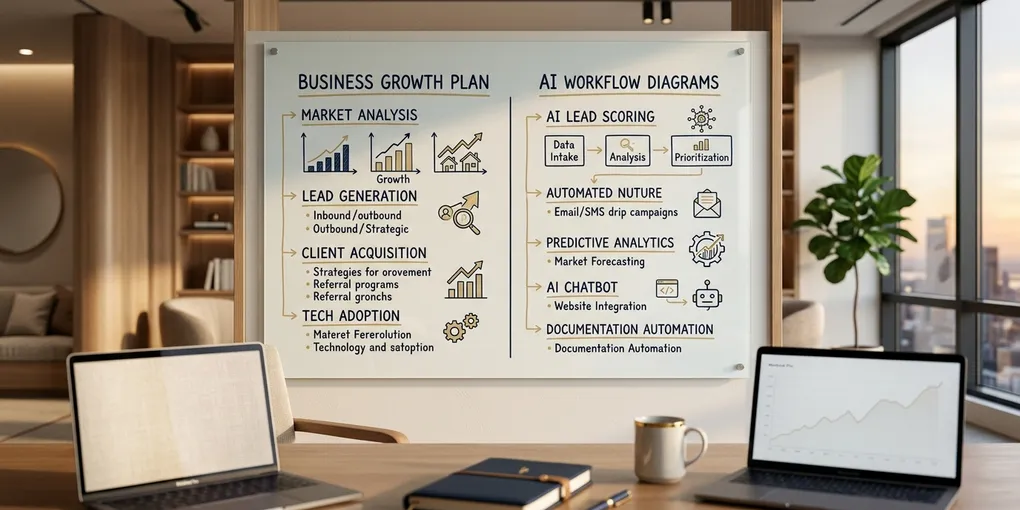
In 2025, my real estate business generated over $180,000 in GCI. December alone was a $60,000 month. I also spent $10,000 on Meta and pay-per-click ads that produced exactly zero closed deals.
Those two numbers shaped everything I’m doing differently in 2026.
My target is $300,000 in GCI — roughly double last year. That sounds aggressive until you look at where the money actually came from. YouTube generated 90 to 95 percent of my business. The paid ads generated frustration. The math is obvious: scale what works, fix what doesn’t, and use AI to make both possible without burning out.
Here are the three AI strategies I’m implementing right now. Two are already running. The third is an experiment that could fundamentally change how real estate agents think about advertising.
Strategy 1: The AI Avatar Content Engine
I made over 340 videos in 2025 to grow my real estate business. Each one took 10 to 15 hours when you factor in scripting, filming, lighting setup, editing, and post-production. That’s not sustainable if you also want to, you know, sell houses.
The bottleneck was always me. I had to be in front of the camera, in my studio, with the right setup. My editor handled post-production for about $5,000 for the entire year — a fantastic return on investment against $150,000+ in YouTube-generated GCI. But the production side still ate my time alive.
So I built an AI avatar.
This isn’t one of those obviously fake digital clones that makes people uncomfortable. My avatar is trained on my actual videos, my voice patterns, my mannerisms. When I play the output for people, they genuinely can’t tell the difference. It looks like me, in my studio, delivering content the way I always do.
The shift this creates is structural. My first full-time content team member now controls the avatar. He handles scripting and production. I review for quality and accuracy — my expertise, my insights, my market knowledge still drive every piece of content. But I’m no longer spending 10 to 15 hours per video on execution.
My production target for 2026 is two to three videos per week. That was physically impossible when I was the sole production bottleneck. With the avatar system, it’s realistic.
Why This Matters for AI Real Estate Business Growth in 2026
Most high-producing agents I know built their business through open houses, door knocking, cold calling, or sphere of influence. They’re excellent at what they do. But almost none of them are closing five to ten deals per year directly from content and social media.
It’s not that they lack expertise — they have more market knowledge and deal experience than I do. They just haven’t cracked the content system. And content is where the leverage is. Every video I publish works for me 24 hours a day, pulling in leads from people who already know my face, trust my perspective, and are pre-sold on working with me before we ever speak.
The AI avatar removes the biggest objection these agents have: “I don’t have time to make videos.” You don’t need time anymore. You need a system. If you want to explore what AI tools look like in practice for real estate, that’s a good place to start understanding the landscape.
Strategy 2: Virtual Tour Multiplication
Home tour videos perform well on YouTube, but they’re expensive to produce in terms of time. I have to drive to the property — sometimes an hour each way — spend an hour filming, then get the footage to my editor. For properties outside my immediate area, that’s a three-hour commitment per video minimum.
AI virtual staging changes the economics completely.
Here’s the workflow I’m running now: I take one listing with professional photos — unstaged rooms, empty spaces — and run them through AI virtual staging software. But instead of staging it once, I create five to six variations. Modern furniture. Luxury style. Scandinavian. Japanese minimalist. Each style appeals to a different audience segment.
From those six staged photo sets, my team creates six different video tours. One listing becomes six pieces of content. The AI even generates convincing drone shots from a single exterior photo.
The production quality is high enough that viewers engage with these the same way they engage with in-person home tours. And the cost per piece of content drops to almost nothing compared to driving across Austin with a camera.
Scaling Beyond Your Own Listings
This strategy works even if you’re not listing-heavy. I’m reaching out to other agents who have listings and offering to create virtual tour videos for them. They get marketing content for their listing. I get content for my channels and Instagram presence that positions me as an active, knowledgeable agent in my market.
It’s a win-win that costs me almost nothing to produce. And every piece of content feeds the same engine — more views, more leads, more visibility in a market where most agents are still posting the same static listing photos everyone else posts.
If you want to explore the virtual staging tools I’m using, subscribe to the newsletter where I share the specific platforms and workflows.
Strategy 3: The Course-Based Lead Magnet
This is the strategy I’m most excited about, and the one I haven’t seen anyone else in real estate talk about.
Here’s the problem with traditional real estate advertising: you spend money to acquire a lead, and then you get nothing back for six to 24 months. Maybe longer. You pay $50 per lead through Meta, and that lead might not buy or sell for a year and a half. In the meantime, you’re dripping them listings, texting them periodically, calling them — and they’re not picking up.
I spent $10,000 on ads last year with zero closed deals to show for it. The leads have long conversion cycles, and most of them don’t even answer the phone. In my generation, honestly in most generations now, cold calls from unknown numbers go straight to voicemail.
Alex Hormozi’s framework around customer acquisition cost and lifetime value gave me a different way to think about this. What if, instead of running ads that say “click here if you’re interested in buying a home” and collecting phone numbers of people who don’t want to talk to me, I offered something with actual upfront value?
The Austin First-Time Home Buyer Course
I’m building a comprehensive first-time home buyer course specific to the Austin, Texas market. The price point will be somewhere around $49 to $99. Here’s why this changes the math:
Lower effective acquisition cost. If I spend $100 on ads to acquire a course buyer who pays $49, my net acquisition cost drops to $51. If they pay $99, it drops to $1. The course revenue partially or fully offsets the advertising spend. Traditional real estate ads give you nothing back on the front end.
Higher lead quality. Nobody spends money on a course about buying a home in Austin unless they’re seriously planning to buy a home in Austin. The purchase itself is a qualifying action. Compare that to someone who clicks a Facebook ad and enters their email because a free home valuation sounded interesting — there’s no commitment signal there.
Compressed timeline. My hypothesis is that course buyers are further along in their decision process than typical ad leads. They’re investing money to educate themselves about a purchase they intend to make relatively soon. That should mean shorter conversion cycles from lead to closed deal.
How AI Makes the Course Possible
This is where all three strategies connect. I’m scripting the course myself — my market expertise, my actual experience working with Austin buyers, my real knowledge of neighborhoods, pricing dynamics, and the buying process. The quality and accuracy of the information matters too much to delegate.
But the filming? My AI avatar handles that. The editing? My content team handles that. What would have been a months-long production project becomes something I can build in weeks.
The course becomes a lead magnet that pays for itself, attracts highly qualified buyers, and positions me as the obvious choice when those buyers are ready to make an offer.
The Common Thread: Leverage Through AI
All three of these strategies share the same underlying principle. AI doesn’t replace my expertise — it multiplies my reach without multiplying my time investment.
The avatar lets me produce three times more content without spending three times more hours filming. Virtual staging lets me turn one listing into six pieces of content without driving to six properties. The course lets me qualify leads and offset acquisition costs without personally delivering the material to every prospect.
In 2025, my YouTube channel was already the most efficient lead generation channel in my business by a wide margin. $5,000 in editing costs against $150,000+ in GCI is a return that no ad platform can match. The 2026 strategy is about pouring fuel on that fire while simultaneously fixing the ad side of the business.
What I’m Tracking
I’ll be measuring this against specific benchmarks:
- Content volume: Two to three videos per week (up from roughly one per week in 2025)
- Content cost per piece: Should decrease with avatar and virtual staging workflows
- Ad ROI: Course revenue should offset 50 to 100 percent of acquisition costs
- Lead quality: Course buyers should convert at a higher rate than traditional ad leads
- Overall GCI: $300,000 target, roughly double the 2025 number
I’m going to be transparent about what works and what doesn’t as these strategies play out. The AI avatar content engine is already running. The virtual staging workflow is producing content now. The course is in development.
Referral Business: The Silent Multiplier
One factor worth mentioning that doesn’t get discussed enough: all of my 2025 business was new business. Every single deal came from someone who found me through content and had no prior relationship with me. I haven’t been in the business long enough to generate significant referral volume yet.
In 2026, I expect to start seeing referral business from past clients. That’s organic growth that requires zero ad spend, zero content production, and zero acquisition cost. It’s the compound interest of doing good work, and it should contribute meaningfully to hitting $300,000 without needing every dollar to come from new lead generation.
When experienced agents share their production numbers — 50 deals, 80 deals — I always want to know the split between new business and referrals. Referrals are easier to close. New business from cold or warm leads is significantly harder. The fact that I’m competing for market share against established agents purely through content tells me the content strategy is working. These agents have decades more experience, but they haven’t built content systems that make them visible to the people actively searching for help.
Try This in Your Business
You don’t need to implement all three strategies at once. Start with one.
If you’re already comfortable on camera, explore the AI tools available for content production and see where you can reduce your per-video time investment.
If you have listings but aren’t maximizing them for content, virtual staging and AI video generation can multiply your output from a single property.
If you’re spending money on ads with long conversion cycles and low contact rates, think about whether a course or educational product could improve your acquisition economics.
I send detailed breakdowns of the tools, workflows, and results from these strategies through the Real Estate AI Society newsletter. If you want to follow along as I test these approaches against real numbers in a real business, that’s the best way to stay updated.
The agents who figure out AI leverage in 2026 are going to pull ahead in ways that compound over time. Every piece of content, every automated workflow, every system that runs without your direct involvement — that’s time you get back to actually work with clients, negotiate deals, and grow your business.
I’m betting my entire 2026 growth plan on this approach. I’ll share the results either way.
Liked this article? Get more like it.
AI tools, prompts, and workflows that close deals — delivered in 5 minutes a week. Free, unsubscribe anytime.